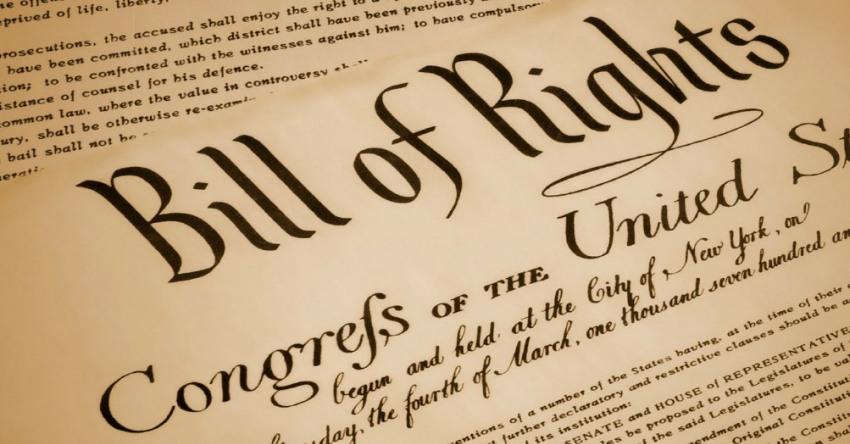
Defend the Bill of Rights
Rights Are Not Permissions
The Bill of Rights does not grant Americans their freedoms. It recognizes them—and limits the power of government to take them away.
Those limits are being tested.
Across the country, we are seeing increasing pressure on free speech, the right to keep and bear arms, privacy protections, due process, and property rights. Too often, these rights are treated as flexible, conditional, or subject to administrative interpretation.
They are not.
I am running to defend the Bill of Rights as written—not as reinterpreted by bureaucracies, courts, or political convenience.
What Is Driving the Problem?
Expansion of Federal Power
As the federal government has grown, so has its ability to restrict or condition the exercise of individual rights. What begins as policy often becomes precedent.
Administrative and Judicial Erosion
Rights are increasingly shaped by agency rules and court interpretations rather than clear constitutional boundaries. This creates uncertainty and gradual erosion over time.
Conditional Rights Framework
Rights are often treated as privileges that can be expanded or restricted based on compliance, licensing, or shifting policy priorities.
Fear-Based Policy Making
Moments of crisis are frequently used to justify long-term restrictions on liberty. Temporary measures become permanent, and exceptions become the rule.
Why It Matters to Idaho
Idaho has a strong tradition of individual liberty, self-reliance, and constitutional government.
When federal policies weaken the Bill of Rights, they weaken that tradition. Whether it is restrictions on speech, pressure on firearm ownership, erosion of privacy, or limitations on due process, the effects are felt directly by Idaho families.
A government that can limit one right can limit others. These protections are connected.
My Approach
The Constitution is not a suggestion. It is the law.
The Bill of Rights sets clear boundaries on government power. Those boundaries must be enforced consistently—not selectively.
Defending these rights requires more than rhetoric. It requires resisting federal overreach, holding agencies accountable, and ensuring that laws and policies remain within constitutional limits.
Core Protections
First Amendment – Free Speech and Expression
Americans have the right to speak, publish, assemble, and petition without government interference. I will oppose efforts to censor lawful speech, whether directly or through government pressure on private platforms.
Second Amendment – Right to Keep and Bear Arms
The right of individuals to defend themselves is fundamental. I support the full protection of the Second Amendment and oppose federal actions that treat law-abiding citizens as a threat.
Fourth Amendment – Privacy and Security
Americans have the right to be secure in their persons, homes, and data. I oppose warrantless surveillance, mass data collection, and policies that erode privacy.
Fifth and Sixth Amendments – Due Process
Every individual is entitled to fair treatment under the law. I support strong due process protections and oppose systems that bypass constitutional safeguards.
Property Rights
The ability to own and control property is essential to liberty. I will oppose federal actions that undermine property rights through regulation, seizure, or indirect control.
Policy Priorities
Enforce Constitutional Limits
I will support legislation and oversight that ensures federal actions remain within constitutional boundaries.
Oppose Federal Overreach
I will resist laws, regulations, and executive actions that infringe on individual rights, even when politically convenient.
Strengthen Accountability
Federal agencies and officials must be held accountable when they violate constitutional protections.
Protect Rights in Modern Contexts
Constitutional rights apply in digital spaces, financial systems, and emerging technologies—not just traditional settings.
Day One Priorities
In the Senate, I will support legislation and oversight to:
- Defend First and Second Amendment protections against federal infringement
- Strengthen protections against warrantless surveillance and data collection
- Challenge regulations that violate due process rights
- Increase oversight of federal agencies that impact constitutional freedoms
- Ensure that emergency powers are not used to permanently restrict liberty
Bottom Line
The Bill of Rights is not negotiable.
It is not flexible. It is not conditional. It is not subject to administrative convenience.
If we allow these rights to be weakened, we will not get them back.
I will defend them—clearly, consistently, and without apology.